
Understanding the Biblical Interpretation of Yahweh and Ancient Worship through the 14 Gates
“God is Light, and in Him is no darkness at all.”
— 1 John 1:5
“You shall know the truth, and the truth shall set you free.”
— John 8:32
Gate 5: Dan — The Trial of Judgment in the Wilderness
In Acts 7:38–43, Stephen speaks prophetically of the Israelites in the wilderness, who despite receiving the oracles of God, carried with them the tent of Molech and the star of Rephan. Their hearts remained tethered to false gods, even as Moses led them physically away from Egypt.
This is the spiritual challenge of Gate 5: Dan, the Gate of testing and discernment, where the soul must learn to distinguish between the voice of the divine and the echoes of bondage. Molech and Rephan symbolize soul deviations—energies rooted in ritual control, sacrifice, and fear, remnants of an older cosmology. Through the 40-year journey, Israel carried not only the Ark but also confusion about which “god” they were truly following.
“I hate, I despise your festivals, and I take no delight in your solemn assemblies.”
— Amos 5:21
Even the prophets cried out against the misidentification of Yahweh with justice, when in truth, it had become a mask of fear and punishment.
Yahweh and the Distortion of the Divine Name — Gate 7: Gad, The Battle of Duality
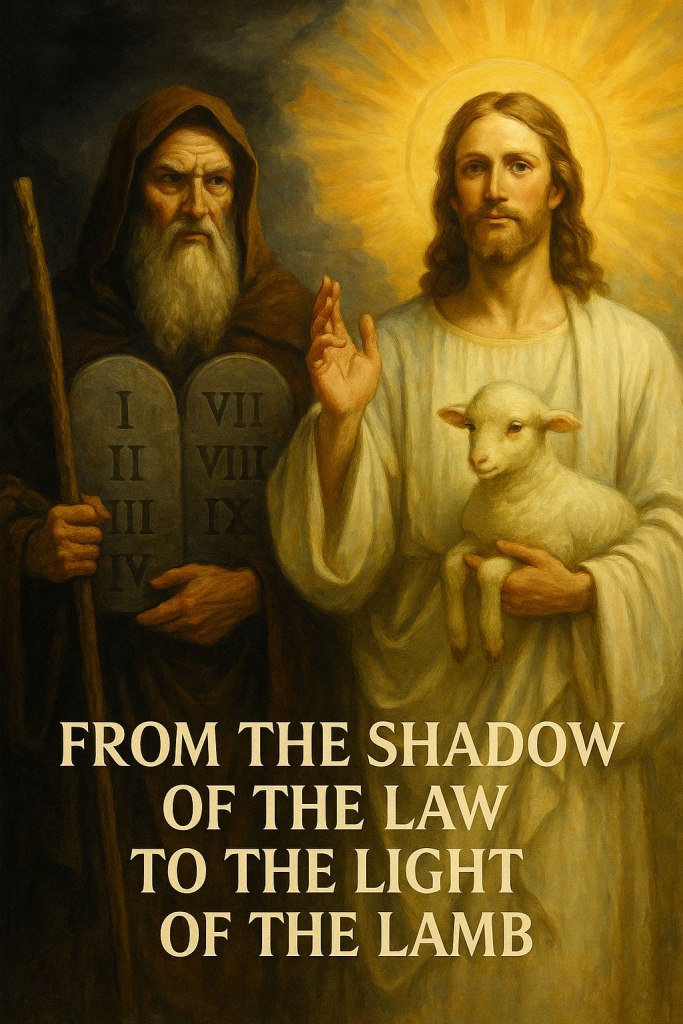
The God of the Old Testament—Yahweh—is often presented as jealous, punitive, and legalistic. He permits slavery, enacts genocide, and commands total obedience under threat of death. And yet, this is the same God that Jesus claims to “fulfill.” But what if “fulfillment” doesn’t mean agreement, but transcendence?
“I did not come to abolish the Law, but to fulfill it.”
— Matthew 5:17
This is the secret of Gate 7: Gad, the battlefield between light and shadow. Yahweh, as portrayed in certain texts, appears more like the adversary (Satan)—whose very name in Hebrew means “the accuser.” Consider:
“You are of your father the devil… he was a murderer from the beginning.”
— John 8:44
Jesus does not name Satan as an external being here, but as the spirit of legalism, judgment, and accusation embodied by the Pharisees—keepers of the Yahwist law.
Gate 6: Naphtali — The Freedom from Mental Slavery
Paul, the mystic initiate of Gate 6, declares:
“Christ has redeemed us from the curse of the law.”
— Galatians 3:13
The “curse” is not the law itself, but the binding illusion that righteousness comes through external adherence rather than inner transformation. The Gate of Naphtali represents the untethering of the mind from the inherited yoke of doctrine.
“It is for freedom that Christ has set us free. Do not be burdened again by the yoke of slavery.”
— Galatians 5:1
This yoke is not Egyptian. It is Yahwist—the yoke of external perfection, of measuring one’s worth by rules without Spirit.
Gate 8: Asher — The Mystical Separation of Image and Essence
The divine name “Yahweh” becomes problematic when its image contradicts the revelation of Christ. In Gate 8, the Gate of Mystical Anointing, we see that not all that shines is Light. Paul writes:
“Even Satan masquerades as an angel of light.”
— 2 Corinthians 11:14
This aligns with Gnostic teachings, particularly the Secret Book of John, which tells us that Yaldabaoth, the demiurge, claimed to be the only god, saying:
“I am God and there is no other beside me.”
— Isaiah 45:5 (a verse used to expose the demiurge in Gnostic texts)
Yaldabaoth is the god of blindness, not of true divinity. He reflects the unredeemed shadow—a distorted image of God rooted in control, not communion.
Jesus, the Gate of Truth — Gate 13: Melchizedek
Jesus did not just reinterpret Yahweh—he revealed the True God behind the veil. When he said, “I and my Father are One,” he was speaking of a Father not seen before. This is Gate 13, the Priesthood of Melchizedek—a priesthood “without beginning or end,” beyond the Levitical order (Hebrews 7).
“Whoever does not love does not know God, for God is love.”
— 1 John 4:8
This verse alone undoes any theology that glorifies wrath, jealousy, and eternal punishment. Through Gate 13, we recognize the difference between Divine Being and distorted representation.
The Rejection of Fear Religion — Gate 9: Issachar, The Burden Breaker
Modern Satanism is often a reaction—a rebellion not against God, but against the image of God presented by religion. It is the cry of Issachar under his heavy burden (Genesis 49:15). When God is seen only as punisher, the soul rebels—seeking freedom, even in the false light of self-worship.
But Paul reminds us:
“The god of this world has blinded their minds…”
— 2 Corinthians 4:4
The god of this world is the one who traffics in fear, punishment, and control—whether called Yahweh, Saturn, or Satan. Gate 9 invites us to cast off this burden and receive the inner illumination of true sonship.
Gate 12: Benjamin — The Child of Light
Jesus’s resurrection is not just the defeat of death—it is the exposure of false theology. The New Covenant doesn’t merely replace the old; it unmasks the illusion of separation.
“A new commandment I give to you: Love one another.”
— John 13:34
Here is no jealousy. No wrath. Only unified light. Through Gate 12, the soul is born again as Benjamin, “the son of my right hand”—a child no longer under guardians (Galatians 4:1-3), but an heir of divine love.
Gate 14: The Womb of Resurrection — Return to the Mother
The final fulfillment of Jesus’s mission is not to enforce obedience, but to birth a new humanity through divine union. At Gate 14, the Womb of the Mother, we are remade—not by law, but by Light and Grace. As Isaiah prophesied:
“By His stripes we are healed.”
— Isaiah 53:5
Healed from what? Not merely sin, but from the false image of God.
✧ Beyond Yahweh, Into the Heart of Christ
The Gatian Path does not deny the Old Testament—it recontextualizes it. It shows us that the name Yahweh may have carried within it both shadow and light, but Jesus revealed the true Face of God: one of mercy, compassion, and unity.
Yahweh may have been a stepping-stone—a guardian until the fullness of time. But in Christ, we are no longer servants of the Law. We are sons and daughters of the Living God.
“When the perfect comes, the partial shall pass away.”
— 1 Corinthians 13:10
Let the veil fall. Let the illusion dissolve. Let the true God of love rise from within.

Leave a comment